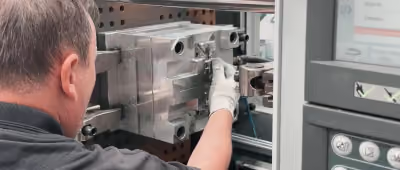
In the world of manufacturing, selecting the right plastic parts manufacturer is a critical decision that can influence the quality and success of your product. Plastic components play a significant role in a wide array of industries, from automotive to consumer electronics. The effectiveness of these parts often hinges on the expertise and capabilities of the manufacturer. With numerous options available, determining the best partner requires careful consideration of several factors. This guide provides insights into the essential aspects of choosing a reliable plastic parts manufacturer.
Understanding Manufacturing Capabilities
When evaluating potential manufacturers, it is crucial to delve into their production capabilities. The right manufacturer should be equipped with state-of-the-art facilities and advanced machinery to meet specific project requirements. Key capabilities to consider include:
- Injection Molding: A versatile technique for producing complex plastic parts with high precision.
- 3D Printing: Ideal for rapid prototyping and producing intricate designs.
- Thermoforming: Suitable for creating large, thin-walled parts with uniform thickness.
- Machining: Essential for achieving fine details and precise dimensions.
Find out more about this approach to ensure your manufacturing needs are met with the highest standards.
Quality Assurance and Certifications
Quality assurance is non-negotiable when it comes to plastic parts manufacturing. It is vital to work with a manufacturer that upholds stringent quality control measures and holds relevant certifications. Consider the following:
- ISO Certifications: Verify if the manufacturer complies with international standards for quality management.
- Material Verification: Ensure that they conduct thorough testing of raw materials to guarantee product durability.
- Process Audits: Regular audits should be in place to maintain consistent production quality.
Discover expert strategies here for ensuring quality in manufacturing processes.
Customization and Innovation
A manufacturer”?s ability to offer customization and innovate can significantly impact the outcome of your project. Look for a partner who is willing to tailor their services to your specific needs. Key considerations include:
- Design Flexibility: The manufacturer should support custom designs and offer suggestions to enhance functionality.
- R&D Capabilities: Innovative manufacturers invest in research and development to offer cutting-edge solutions.
- Prototyping Services: Access to rapid prototyping can expedite the design-to-production process.
Learn about our tailored solutions that enable customization and drive innovation.
Cost Management and Efficiency
Cost is a critical factor, but it should not compromise quality and efficiency. A reputable manufacturer will provide transparent pricing and suggest cost-effective strategies without sacrificing product integrity. Consider these aspects:
- Value Engineering: Techniques to optimize the product design for cost savings.
- Bulk Manufacturing: Discounts and efficiencies can be achieved with larger production runs.
- Supply Chain Management: Efficient logistics and inventory management reduce overhead costs.
Explore advanced guides and tips on managing production costs effectively.
Reputation and Client Feedback
Finally, reputation and client feedback are invaluable in assessing a potential manufacturing partner. A track record of successful projects and positive client testimonials can provide assurance of a manufacturer”?s reliability. Consider the following steps:
- Review Case Studies: Analyze past projects to gauge experience in relevant industries.
- Request Client References: Speaking with previous clients can provide insights into the manufacturer”?s service quality.
- Check Online Reviews: Assess online platforms for unbiased feedback from other clients.
Find out more about this approach to choosing a manufacturer based on reputation and client satisfaction.
In conclusion, selecting the right plastic parts manufacturer requires a thorough evaluation of their capabilities, quality assurance processes, customization options, cost-effectiveness, and reputation. By considering these factors, businesses can forge partnerships that lead to successful and efficient product manufacturing. For more comprehensive insights and strategies, discover expert strategies here and ensure your manufacturing decisions are well-informed.
